Connect with us

Science & Tech

Developments in brain-computer interface technology

Published

on

0%

Developments in brain-computer interface technology
1 / 10

Which 2025 Neuralink trial enabled a nonverbal ALS patient to type and communicate using thoughts?

Next Question

2 / 10

What material innovation, reported in 2024, improved wearable BCI comfort and biocompatibility?

Next Question

3 / 10

Which BCI, approved by the FDA in 2023, monitors brain activity to prevent epileptic seizures?

Next Question

4 / 10

What ethical concern is associated with BCI brain signal data, according to a 2022 U.S. GAO report?

Next Question

5 / 10

Which non-invasive BCI method, improved in 2025 by Georgia Tech, uses microneedle sensors between hair follicles?

Next Question

6 / 10

What is a major challenge for invasive BCIs, as noted in a 2020 *Nature Reviews Neuroscience* study?

Next Question

7 / 10

Which BCI application, demonstrated by Neuralink in 2025, allowed users to play Call of Duty using only brain signals?

Next Question

8 / 10

What 2023 advancement allowed BCIs to translate neural signals into speech at near-conversational speeds?

Next Question

9 / 10

Which company’s Stentrode, implanted via blood vessels, was tested in 10 volunteers by 2025 for paralysis?

Next Question

10 / 10

What technology, developed by Johns Hopkins APL in 2024, uses digital holographic imaging to record neural activity non-invasively?

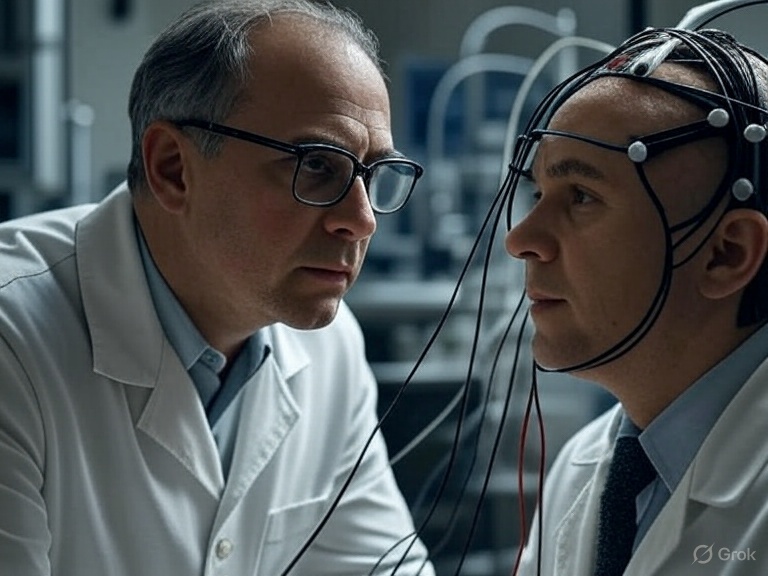
Did you know that recent advancements in brain-computer interface (BCI) technology are making it possible for people to control devices using only their thoughts?

BCI systems work by interpreting brain signals and translating them into commands for computers or prosthetic devices.

One of the most exciting developments is the use of BCIs to help individuals with paralysis regain control over their environment.

Researchers have demonstrated that BCIs can enable users to operate robotic limbs, communicate through digital text, and even control wheelchairs using brainwaves alone.

This technology has the potential to transform lives by offering new independence and interaction possibilities to those with severe physical limitations.

Moreover, companies like Neuralink are exploring more seamless integrations where a small chip implanted in the brain could one day facilitate an ultra-high bandwidth connection between the human brain and machines, opening up even more revolutionary possibilities for the future.

Advertisement

How did you do on the quiz? Share your results and thoughts in the comments below!

Advertisement
Click to comment

Leave a Reply

Your email address will not be published. Required fields are marked *